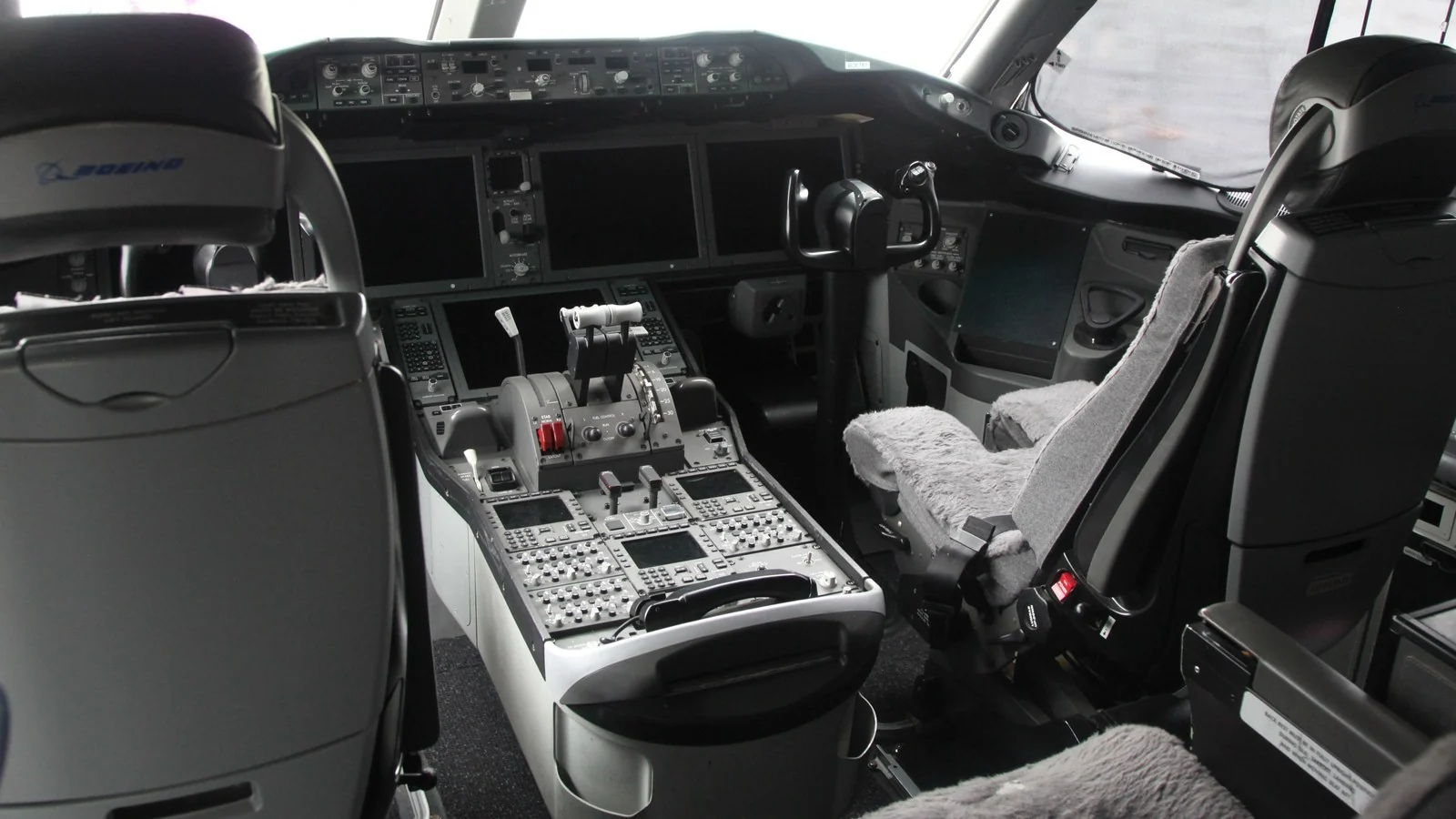

The first officer is not the captain’s personal sidekick. There is no airline equivalent of a detective demanding to work only with the same partner.
What matters is that the people assigned can do the job together. Knowing each other already can be pleasant. It is not the foundation the operation should depend on.
Is the Copilot a Qualified Pilot?
“Copilot” usually means the first officer in a captain–first officer crew (here’s what the stripes mean). It does not mean an unqualified learner sitting beside the real pilot.
The first officer must be qualified for the assigned role. That does not mean identical experience or identical command privileges. In US Part 121 operations, for example, 14 CFR 121.436 requires the second in command to hold an airline transport pilot certificate and the appropriate aircraft type rating. Source: current US qualification rule.
A qualified pilot can still be new to an airline or aircraft and need supervised operating experience. “First officer” and “trainee” are not interchangeable labels.
A Trip Partner Is Not a Permanent Copilot
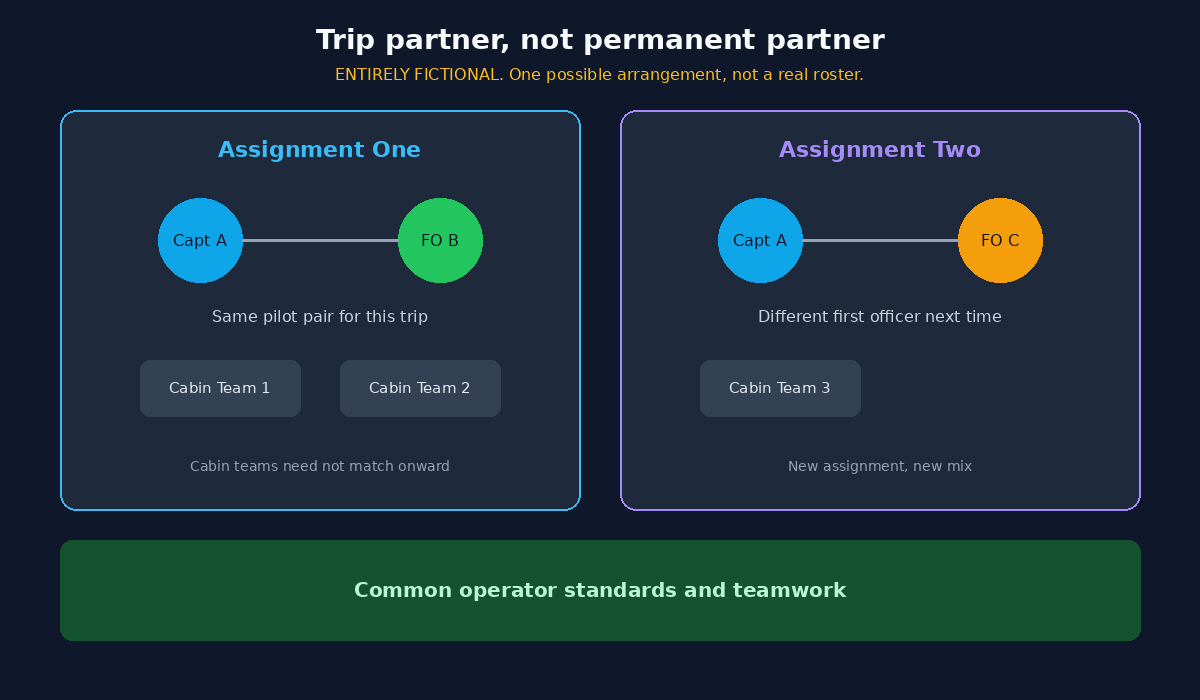
A trip can contain several flights. Keeping the same two pilots together for that assignment is quite different from keeping them together indefinitely.
An ALPA pilot account describes a crew on a multiday trip, including an aircraft change. It illustrates one assignment, not a guarantee that every crew stays intact. Source: ALPA.
The next assignment can bring another colleague. Repeat pairings depend on the operation, not a permanent captain–first officer partnership.
For how trips fit into a month, see our airline pilot schedule explainer. The important point here is the person alongside you, not how many days the trip lasts.
“Pairing” can also mean a sequence of work in airline scheduling, not a permanent match between two people.
Why Fleet and Base Matter More Than the Uniform
The pool of possible colleagues is not simply everyone wearing that airline’s uniform.
Pilots need the qualifications and operating eligibility for the aircraft assigned. Sharing a uniform is not enough.
Base and fleet assignments then shape which eligible people are likely to meet. Pilot-led coverage of this question identifies home base, aircraft qualification, scheduling preferences and seniority as important factors. The details depend on the operator and its bidding arrangements. Source: Simple Flying.
A smaller eligible group offers fewer possible partners. It does not guarantee the same one. Two colleagues can still prefer different work, receive different assignments or simply miss each other on the roster.
There is no useful universal “you fly with the same person every X trips” rule.

Can Pilots Choose Who They Fly With?
Sometimes they can express a preference. That is not the same as being guaranteed a favourite colleague.
Seniority and compatible preferences can bring pilots onto overlapping work. If two eligible colleagues both want similar trips, they have more opportunity to meet than if their preferences pull them apart. The operator’s bidding system still decides what can be awarded.
There is a concrete example in the Delta pilots’ union PBS handbook, version 4, February 2025. Its employee-number preference lets first officers request or avoid certain captains and more-senior first officers within the specified eligibility limits. Captains cannot use it to select first officers, because captain schedules are built first. That is a constrained preference, not a captain choosing a personal assistant. Source: Delta MEC PBS handbook, p.117.
Do not confuse that with every feature advertised by the software vendor. The same handbook expressly says Delta pilots do not use its generic “buddy bidding” feature. Another airline’s arrangement can be different.
A 2014 USA Today pilot column also described avoid options at some airlines. That historical account does not establish a universal current entitlement. Source: USA Today.
For the wider bidding picture, see our airline pilot schedule explainer. A preferred colleague is one possible input, not the whole roster.
Do Pilots Know Each Other Before a Flight?
Sometimes. Sometimes their first introduction is before that assignment.
A 2016 USA Today pilot Q&A describes first introductions at the preflight briefing. It supplies an example, not a current frequency estimate. Source: USA Today.
Introductions alone do not tell you whether professional requirements have been met. They are not evidence that something has gone wrong.
How Can Pilots Work Together If They Have Never Met?
They should not need to discover each other’s private method of flying an airliner. The starting point is the operator’s common standards and training.
The FAA’s crew resource management guidance describes communication, teamwork, task allocation and decision-making within a framework of standard operating procedures. It calls those procedures a shared mental model. Less elegantly: both people need to understand the same job, not just occupy adjacent seats. Source: FAA AC 120-51E.
This is US guidance, not a worldwide rulebook. Technical skill matters. So do listening, raising concerns and sharing an understanding of what is happening.
A hypothetical first meeting, not a recollection: a captain and first officer introduce themselves before an assignment. They have not flown together before. One asks a question about the plan. The other answers plainly, and they make sure they understand each other.
Matching personalities is optional. Clear communication is not. The question is “Can we speak plainly and listen when it matters?”
The FAA guidance specifically encourages a culture where appropriate questioning is supported. Rank should not make a useful concern inaudible. That is a better foundation than hoping two people happen to get along.
Who Makes Sure the Pairing Works?
This is a managed assignment, not just two available names dropped into a hat.
A 2011 FAA contractor study of ten US Part 121 carriers identified scheduling procedures, scheduler training and pairing controls as best practices. That historical sample is not a worldwide staffing standard. Source: FAA report, section 4.1.
There are also actual US pairing requirements. Under 14 CFR 121.438:
- At least one of the pilot in command or second in command must have 75 hours of line operating flight time in that aircraft type, as pilot in command or second in command. It is not a combined 75-hour total. The FAA can authorize specified deviations through the operator’s operations specifications.
- If the second in command has fewer than 100 hours as second in command in that type in Part 121 operations, and the pilot in command is not an appropriately qualified check pilot, the rule assigns takeoffs and landings to the pilot in command at designated special airports and in specified operating conditions.
Those are scoped US requirements, not worldwide thresholds or the total qualifications needed for the job.
Check pilots also have a role in supervised operating experience. US rules require a second-in-command pilot acquiring that experience to work under an appropriately qualified check pilot. A new colleague does not automatically mean a beginner left to work without the required supervision. Source: 14 CFR 121.434.
Flights can carry additional pilots for relief. Eligibility depends on the rules and operator. US Part 121 imposes additional command-qualification requirements on the second in command for operations requiring three or more pilots, with specified exceptions. Do not assume every relief pilot can fill every role. Source: 14 CFR 121.432.
Do the Flight Attendants Stay With the Same Pilots?
Not necessarily. “The crew” describes everyone working your flight. It does not promise that everyone has the same onward assignment.
A historical pilot Q&A describes cabin-team changes during a pilot’s trip. That demonstrates the distinction, not a current worldwide change frequency. Source: pilot Q&A.
Different assignments do not mean separate islands. The FAA’s CRM guidance includes communication between pilots and flight attendants. People can work different onward trips and still need to work as one team on this flight.
Frequently Asked Questions
Do pilots know each other before a flight?
They may, but they can also meet for the first time before an assignment. Introductions alone do not indicate that anything is wrong. There is no universal frequency for how often colleagues are meeting for the first time.
Can pilots choose who they fly with?
Some operators allow partner preferences or avoidance bids, within eligibility and scheduling limits. Delta’s published pilot handbook describes a restricted preference system, not unrestricted mutual buddy bidding. A preference is not a guarantee of flying together.
Is it safe if the pilots just met?
Meeting for the first time is not, by itself, a reason to think the crew cannot work together. Operator standards, qualification requirements and crew resource management support teamwork. Personal familiarity is not a substitute for those safeguards, and no arrangement guarantees risk-free flying.
Is the copilot a fully qualified pilot?
The first officer must be qualified for the assigned role, not necessarily have the captain’s experience or command privileges. A pilot new to an operation or aircraft can still be completing required supervised operating experience. First officer is not another word for unqualified trainee.
Do airline pilots have the same copilot every flight?
Not as a permanent rule. The same captain and first officer may share several flights or an assignment, but another assignment can bring a different colleague. Practices vary by operator.
Do pilots stay with the same crew for a whole trip?
They can, but it depends on the operator and assignment. Keeping the same pilot partner does not mean the cabin crew necessarily has identical onward assignments.
Does a small base mean pilots always fly together?
No. A smaller eligible group offers fewer possible colleagues, but preferences, fleet assignments and rosters still affect who meets. Base size alone cannot guarantee a repeat pairing.
The Short Version
A familiar colleague is a bonus, not the qualification. Pilots can share a trip without sharing every trip. The standards need to stay familiar even when the name beside yours does not.