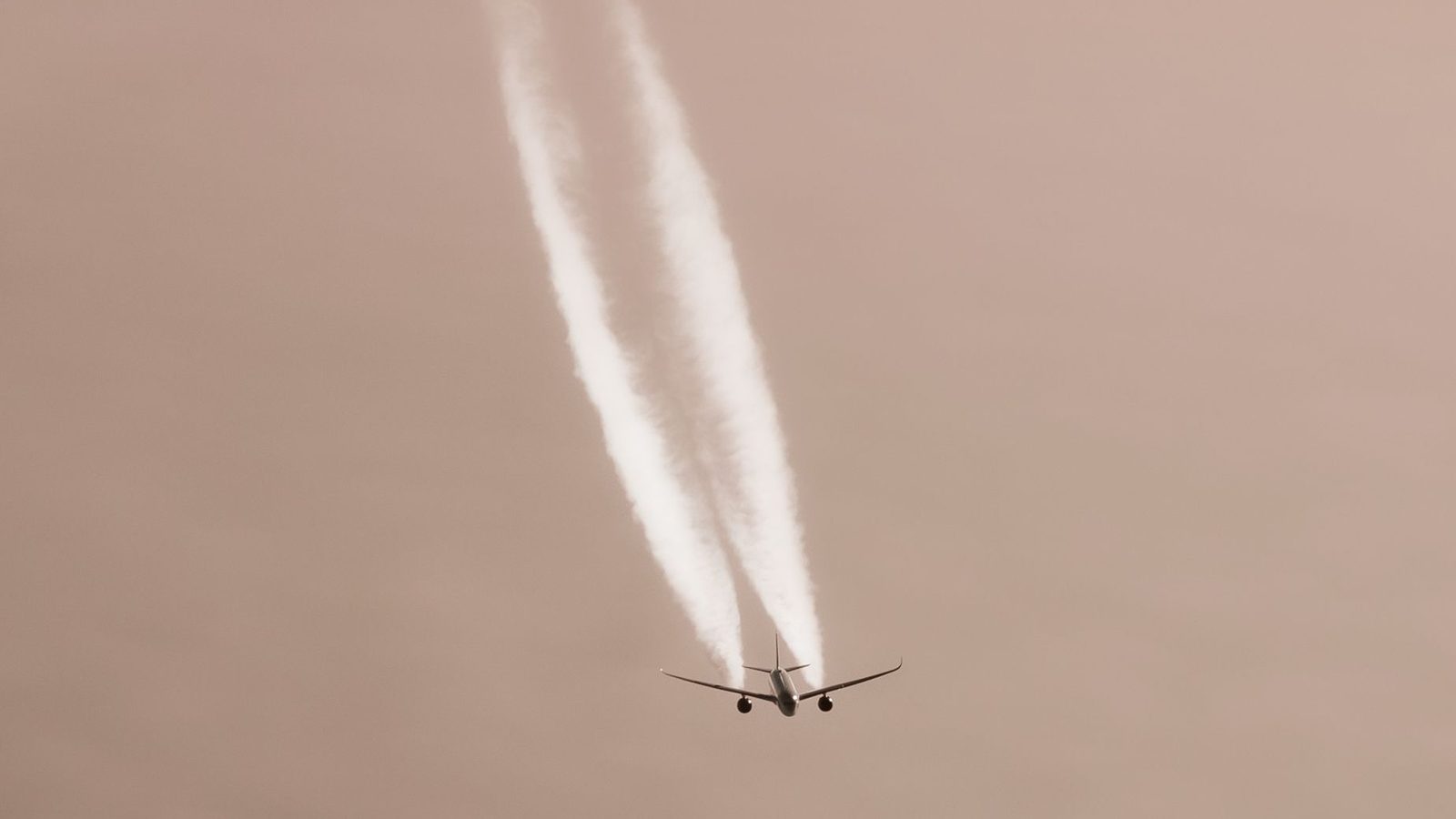
People always want a single number. There isn't one. The airplane has several speeds at once, and the one you care about depends on whether you're asking how fast we're moving through the air, how fast we're covering the miles, or how close we are to the speed of sound.
Here's what those numbers actually look like from the flight deck.
Cruise: The 500 to 600 mph Answer
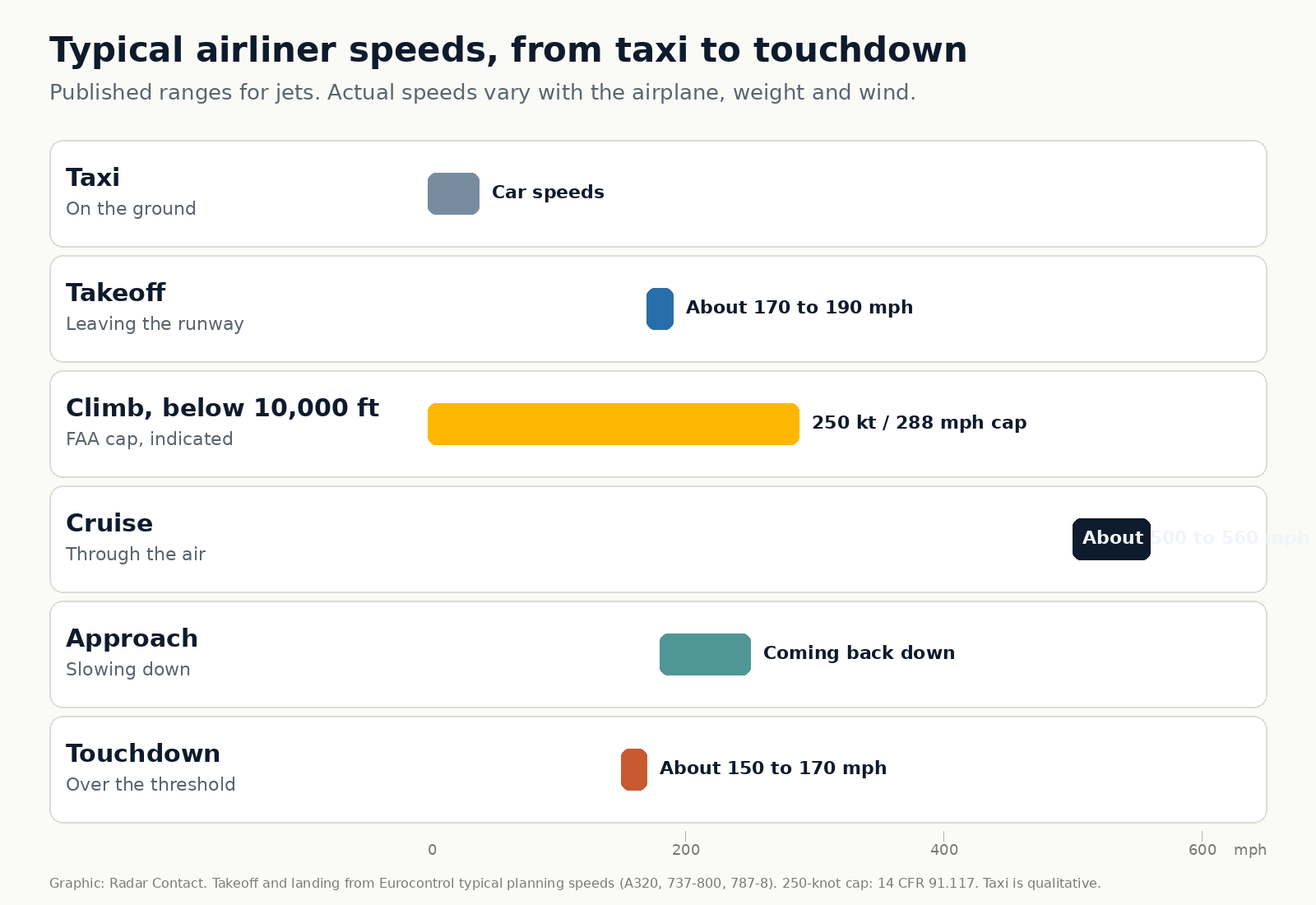
Once we're up at cruise, a typical jet is flying at about Mach 0.78 to 0.85. Mach is just our true airspeed divided by the local speed of sound, which is how the FAA's handbook defines it. At those altitudes, that works out to roughly 500 to 560 mph through the air.
A narrow-body like a Boeing 737-800 or an Airbus A320 usually sits near the lower end. Eurocontrol's planning data puts both around Mach 0.79, about 450 to 460 knots true, or a bit more than 500 mph. Wide-bodies go a little faster. Airbus publishes the A350's cruise as Mach 0.85. Boeing's airport-planning charts for the 777 use Mach 0.84. Eurocontrol lists a typical 787 cruise at Mach 0.85, about 470 knots true, or around 540 mph.
Those aren't trophy numbers. They're a compromise. Go much faster and the fuel bill jumps, because drag rises quickly as you get closer to the speed of sound. That's why today's airliners all live in that same neighborhood, and why a 737 and a 787 don't feel wildly different once you're settled in cruise.
Among the cruise speeds Boeing publishes for airliners, the 747-8 Intercontinental is a little quicker: Mach 0.855, in the company's January 2026 planning document. You would not notice the difference from your seat.
The Number on the Screen Is a Different Speed
The speed on the seat-back map is groundspeed. That's how fast we're actually covering the ground. The FAA's handbook puts it simply: groundspeed is true airspeed adjusted for wind. A tailwind adds to it. A headwind takes away.
What we fly by is different. Indicated airspeed is the number on our airspeed indicator, uncorrected for altitude and temperature. Takeoff, landing and stall speeds in the airplane's manual are indicated airspeeds, and they don't really change with altitude. True airspeed is that figure corrected for altitude and temperature. As the air gets thinner up high, true airspeed is quite a bit higher than indicated for the same reading. Mach is the one we watch in cruise, because that's how close we are to the sound barrier in the air around us.
So you can be looking at 620 mph on the map while we're flying a perfectly normal Mach 0.85. The extra is the wind.
The jet stream is the usual culprit. NOAA describes jet streams as narrow bands of strong wind around 30,000 feet, generally blowing from west to east, and says they can reach more than 275 mph. In winter they're at their strongest, which is why a winter flight from the U.S. East Coast to Europe can be hours shorter than the trip back.
That also produces the wild numbers that show up in the news. In February 2024, AVweb reported that a Virgin Atlantic 787 from Washington, D.C., to London peaked at a groundspeed of 802 mph and arrived 45 minutes early, after the National Weather Service calculated jet-stream winds around 265 mph. The same night, a United 787 from Newark to Lisbon hit 838 mph on FlightAware data. AVweb was careful to say the 787's airspeed was no greater than normal, and that nobody keeps official records for these peaks. The airplane was not breaking the sound barrier. Groundspeed isn't Mach.
Takeoff and Landing Are a Lot Slower
The parts you can actually see out the window are slower, and they change with how heavy we are, the wind, and the airplane.
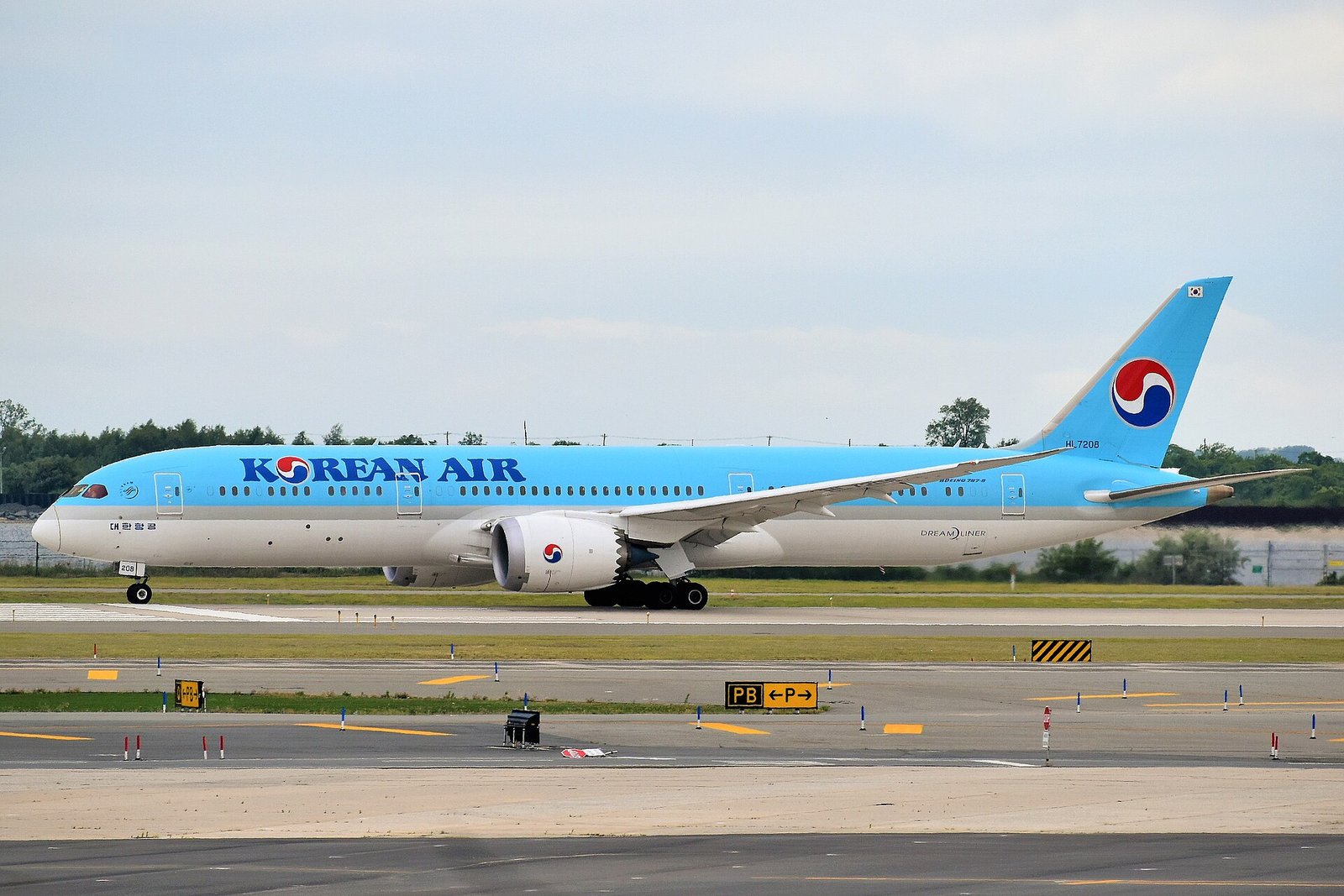
Eurocontrol publishes typical planning speeds, not one airline's numbers. For takeoff, it lists 145 knots indicated for an A320 and a 737-800, and 165 knots for a 787. That's about 170 to 190 mph as we leave the runway. For landing, it lists 137 knots for an A320, 147 for a 737-800, and 140 for a 787 as we cross the threshold, or about 150 to 170 mph. On a light day we'll be slower. On a heavy long trip we'll be a bit quicker.

Most days, that landing is still flown by hand. Autoland is mainly for fog, and whether autopilot can land a plane is a different question.
Why We Slow Down Below 10,000 Feet
In the U.S., the rule is blunt. Unless the FAA has authorized something else, nobody may operate an aircraft below 10,000 feet (from sea level) at more than 250 knots indicated, which the FAA's speed rule itself converts to 288 mph.
There's a narrow exception if the airplane's minimum safe speed is higher than that, but that's not your typical airliner departure or arrival. Once we're above 10,000 feet, we can accelerate toward cruise.
That's why the climb feels like it has two gears. Close to the ground, we're capped. Higher up, we go.
Why 550 mph Doesn't Feel Like 550 mph
If cruise felt like a car at 550 mph, nobody would be sleeping back there. You feel acceleration, not a steady speed. After takeoff, the push in your seat fades. In cruise, we're not speeding up. We're just going.
The cabin is closed, the sound is a hum, and the ground is miles below you. Even looking out those round airplane windows, the world barely seems to crawl. That's not because we're slow. The visual references are just a long way away.
What you do feel is the bumps. That's turbulence, not the cruise speed. Keep the belt on.

Small Planes, and the One That Went Twice as Fast
A typical training airplane is in a different world. Textron's current Cessna Skyhawk brochure lists a maximum cruise of 124 knots true, or 230 km/h. That's about 143 mph. A good clip on the highway, except you're in the air. It's still flying. It's just not a jet.
And then there was Concorde. The Smithsonian's National Air and Space Museum puts its cruise at Mach 2.04, with a maximum speed of 1,330 mph, at 55,000 to 60,000 feet. New York to London took under three hours, against about seven on a normal jet today. It stopped flying on October 24, 2003. Nothing in airline service has replaced that kind of speed. The jets we fly now are built to be efficient, not to beat the sound barrier.
FAQ
How fast do planes go in mph?
A typical airliner cruises around 500 to 600 mph through the air, or roughly Mach 0.78 to 0.85. The number on the seat-back screen is groundspeed, which changes with the wind and can be much higher or lower.
How fast do planes go at takeoff?
It depends on the airplane and how heavy we are. Eurocontrol's typical planning figures are 145 knots indicated for an A320 or 737-800, and 165 knots for a 787, or about 170 to 190 mph as we leave the runway.
How fast do planes go when landing?
Again, it depends on weight and type. Eurocontrol lists typical threshold speeds of 137 knots for an A320, 147 for a 737-800, and 140 for a 787, or about 150 to 170 mph.
What's the difference between groundspeed and airspeed?
Airspeed is how fast we're moving through the air. Groundspeed is how fast we're covering the ground, which is true airspeed plus or minus the wind. We fly by indicated airspeed and Mach. The map on your screen shows groundspeed.
Why doesn't it feel like you're going fast on a plane?
You feel acceleration, not a steady speed. In cruise we're not speeding up, the cabin is closed, and the ground is miles below you, so it barely seems to move. The bumps you feel are turbulence, not the 550 mph.
How fast was the Concorde?
The Smithsonian puts Concorde's cruise at Mach 2.04, with a maximum speed of 1,330 mph. New York to London took under three hours. It last flew on October 24, 2003.
How fast do small planes go?
A typical training airplane is much slower. Textron lists the Cessna Skyhawk's maximum cruise at 124 knots true, or 230 km/h, which is about 143 mph.
Why is there a 250-knot speed limit below 10,000 feet?
In the U.S., federal rules generally cap indicated airspeed at 250 knots, or 288 mph, below 10,000 feet unless the FAA authorizes something else. It keeps everyone at a more manageable speed where airplanes are closer together.
How fast is a 737?
Eurocontrol lists a typical 737-800 cruise of Mach 0.79, about 460 knots true, or a bit more than 500 mph through the air. Takeoff and landing are much slower, around 145 and 147 knots indicated in the same planning data.
Can a passenger jet go faster than the speed of sound?
Not through the air. Today's airliners cruise at about Mach 0.78 to 0.85, and Concorde, which cruised at Mach 2.04, has been retired since 2003. A strong tailwind can push groundspeed past the speed of sound, but that's the wind, not the airplane going supersonic.
Sources
- 14 CFR 91.117, Aircraft speed (eCFR)
- FAA, Pilot's Handbook of Aeronautical Knowledge, Chapter 8 and glossary
- Airbus, A350-900 key figures
- Boeing, 747-8 Airplane Characteristics for Airport Planning (Rev. E, January 2026) and 777-200/-200ER/-300 Airplane Characteristics (Rev. E, December 2024)
- EUROCONTROL Aircraft Performance Database (A320, 737-800 and 787-8 typical planning figures)
- NOAA, The Jet Stream
- Smithsonian National Air and Space Museum, What Happened to the Concordes?
- Textron Aviation, Cessna Skyhawk brochure (2025)
- AVweb, Near-Historic Jet Streams Lead To Record Groundspeeds For Airliners (February 21, 2024)